
Breast Screening Social Toolkit
Explore the SBI social toolkit for shareable graphics, ready-to-post captions, and patient resources. Follow SBI on social media and reshare our posts to help spread the word about the importance of annual screening.
Reshareable Graphics
|
|
|
|
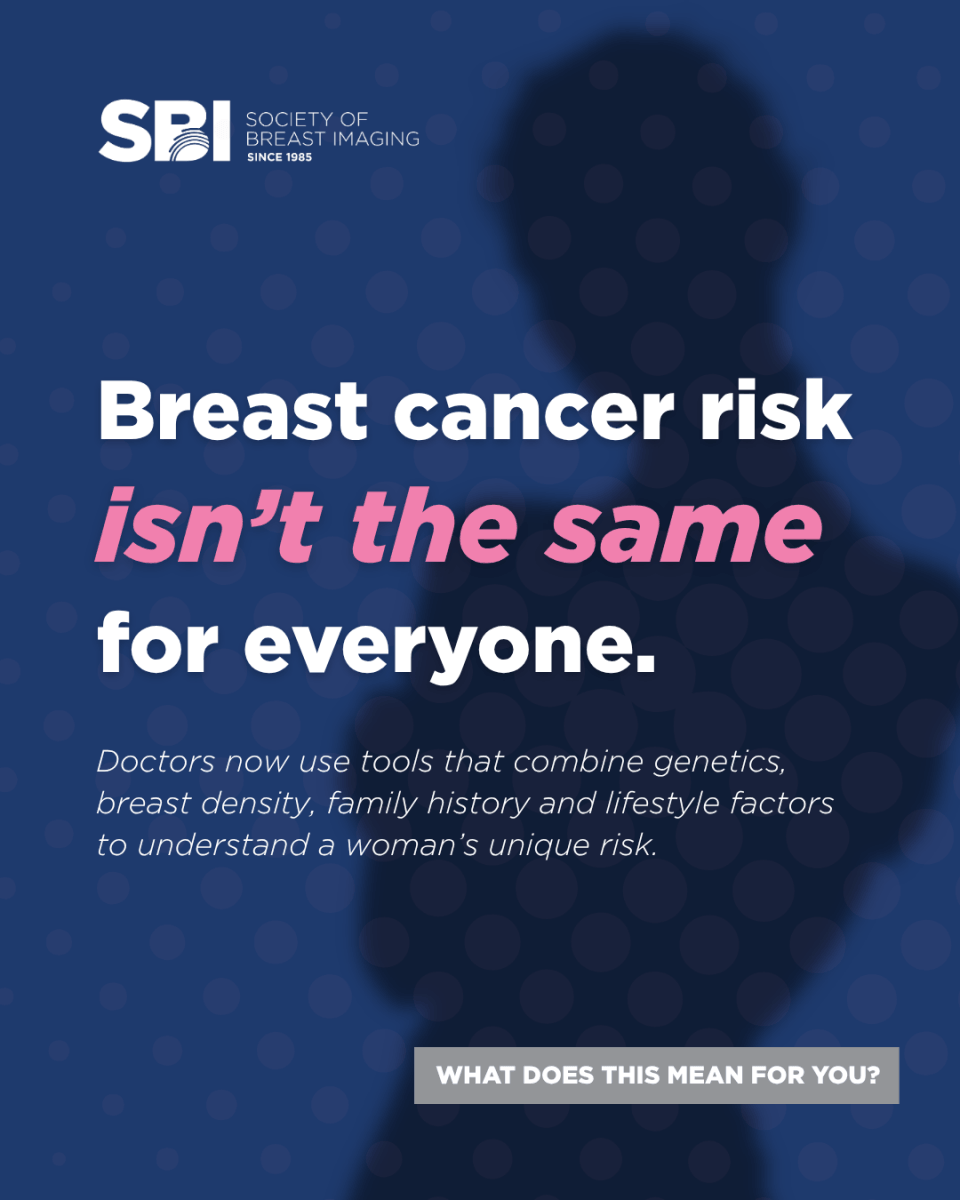
What's your breast cancer risk? Genetics, breast density and lifestyle factors all play a part, and knowing your risk early matters. This Breast Cancer Awareness Month, talk to your provider about a screening plan tailored to you.
Early evaluation can identify high-risk individuals who may benefit from supplemental screening or genetic counseling before standard screening even begins.
#BreastCancerAwarenessMonth #BreastHealth #RiskAssessment #Mammography #40andEmpowered |
While guidelines elsewhere may be confusing, organizations like the Society of Breast Imaging remain steadfast in emphasizing the importance of annual screening beginning at age 40.
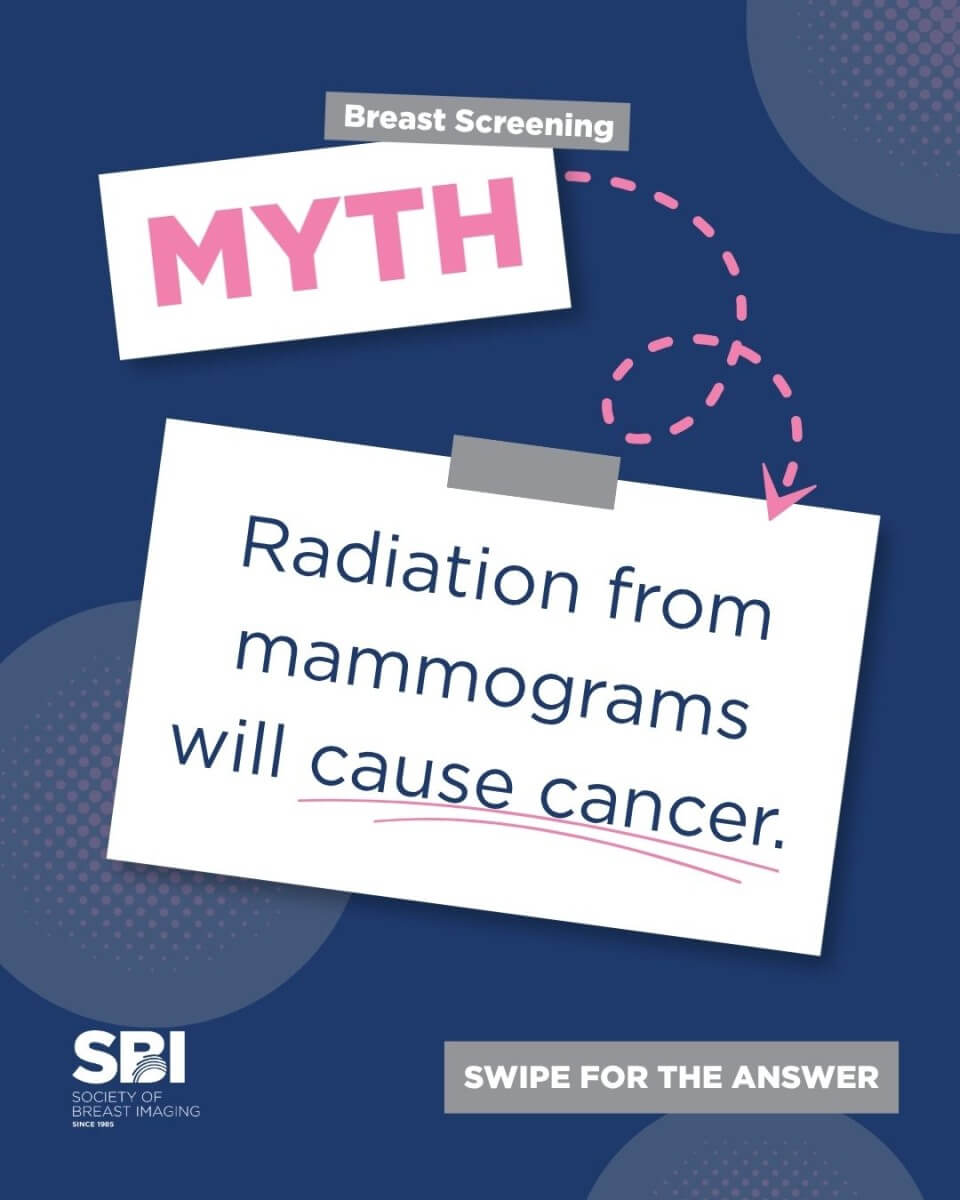
Swipe through for four things patients approaching 40 should know about getting a mammogram.
#BreastCancerAwarenessMonth #BreastHealth #Mammography #40andEmpowered |
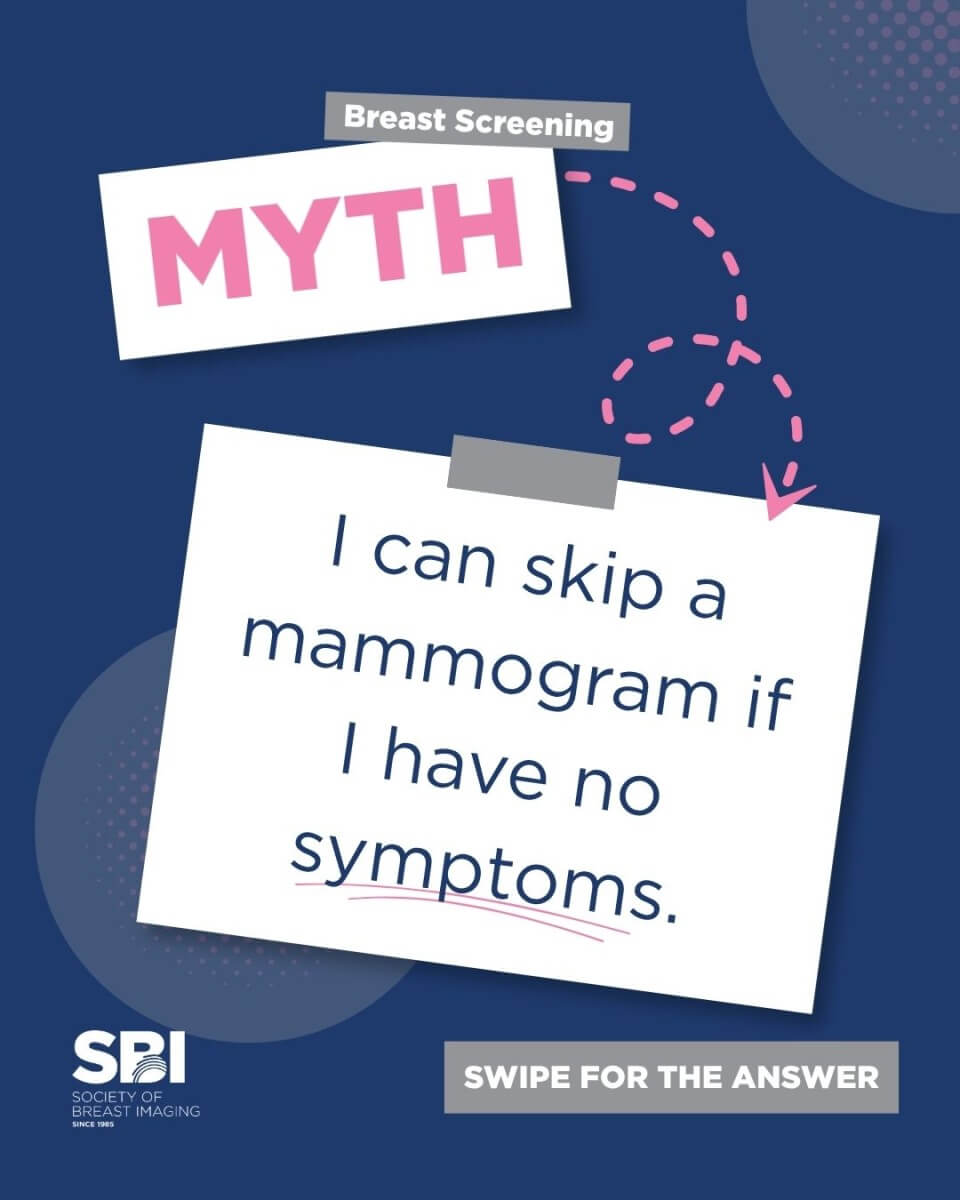
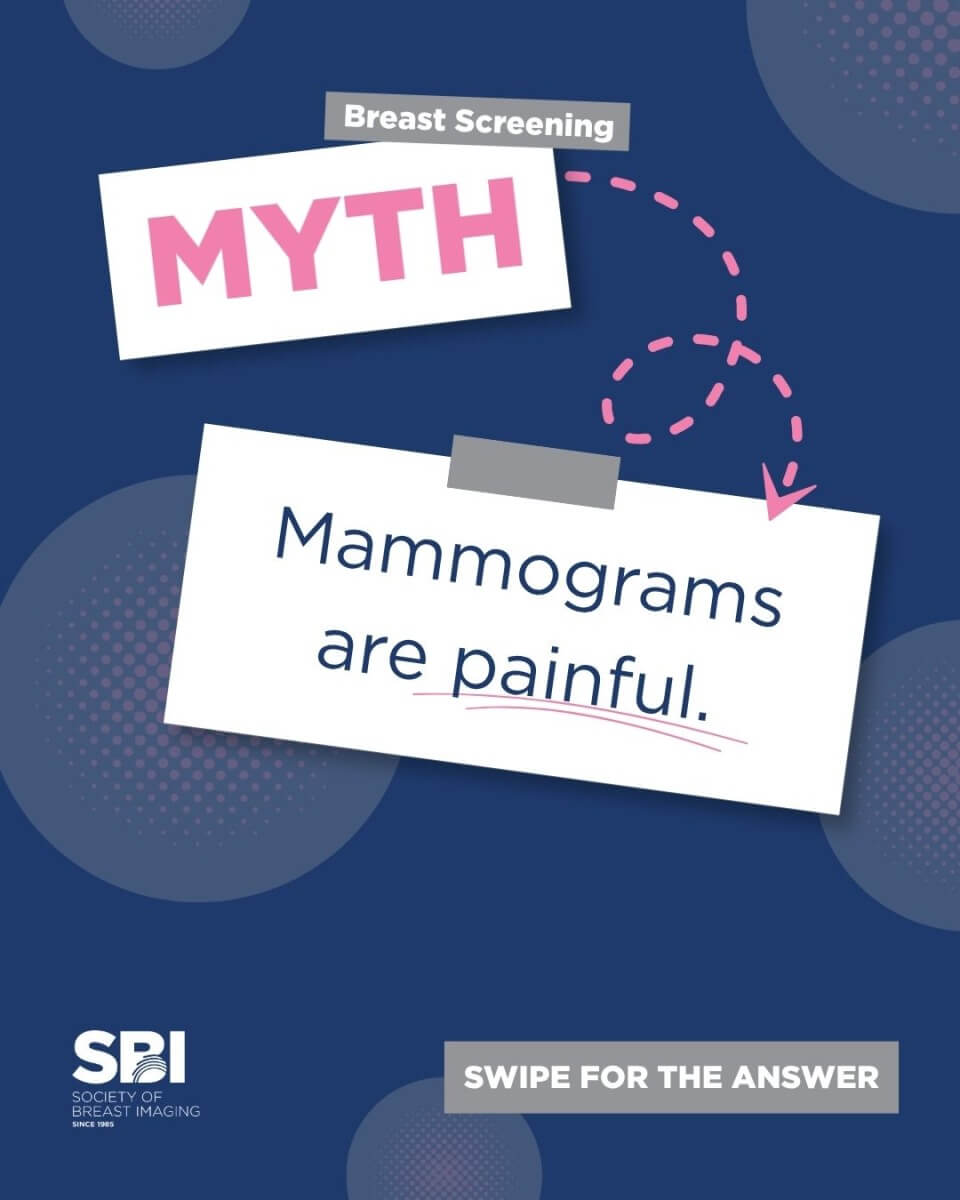
Myth or Fact
|
|
|
|
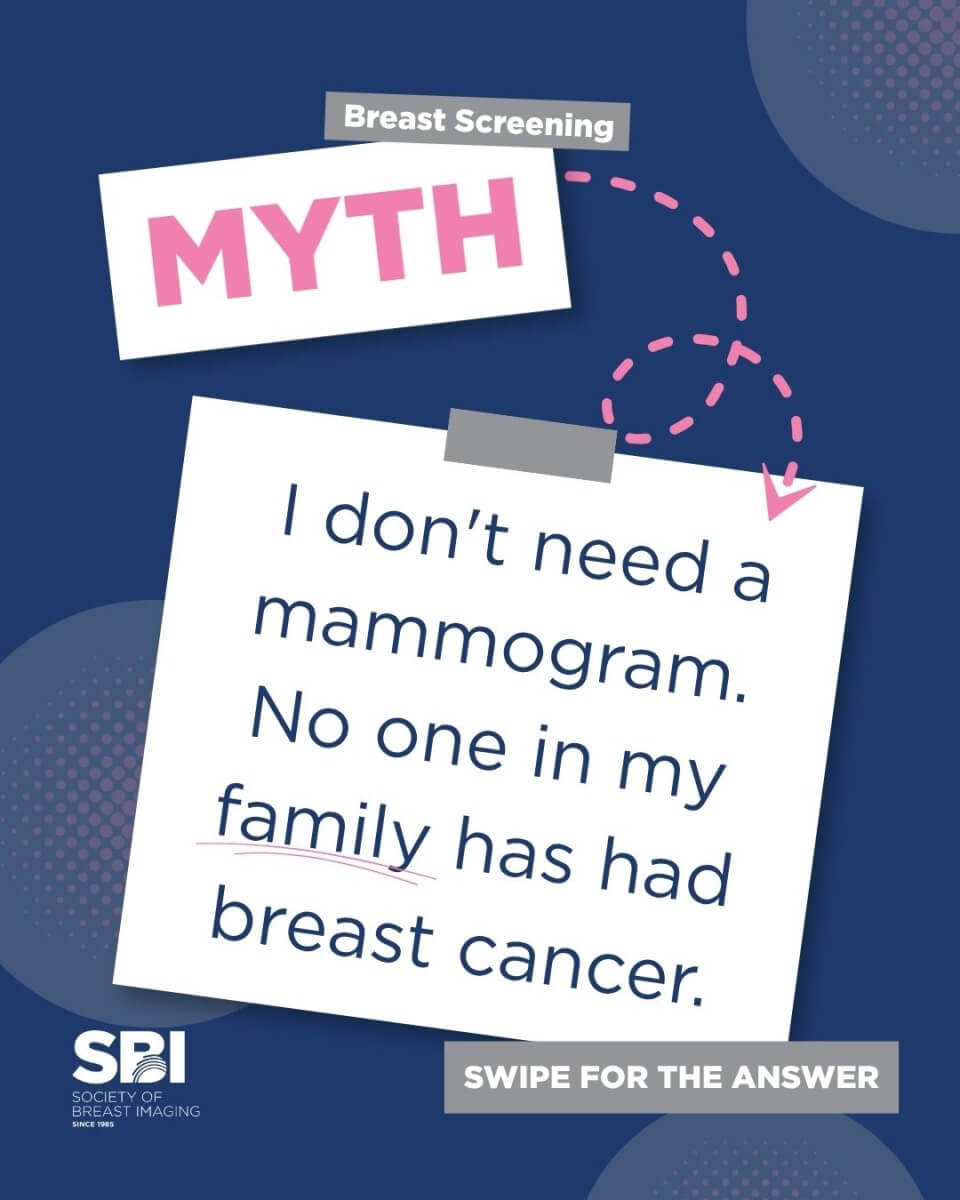
Myth or Fact: I don't need a mammogram. No one in my family has had breast cancer.
MYTH! 75% of new breast cancer diagnoses arise in women with no family history of breast cancer, indicating that most women with breast cancer do not have a family history of breast cancer. For this reason, it is important that all women have screening mammograms yearly, starting at age 40, with or without a family history of breast cancer.
For women with a family history, they should discuss their breast cancer risk with their healthcare provider or radiologist to determine if earlier or more intensive screening may be indicated. #BreastCancerAwarenessMonth #40andEmpowered |
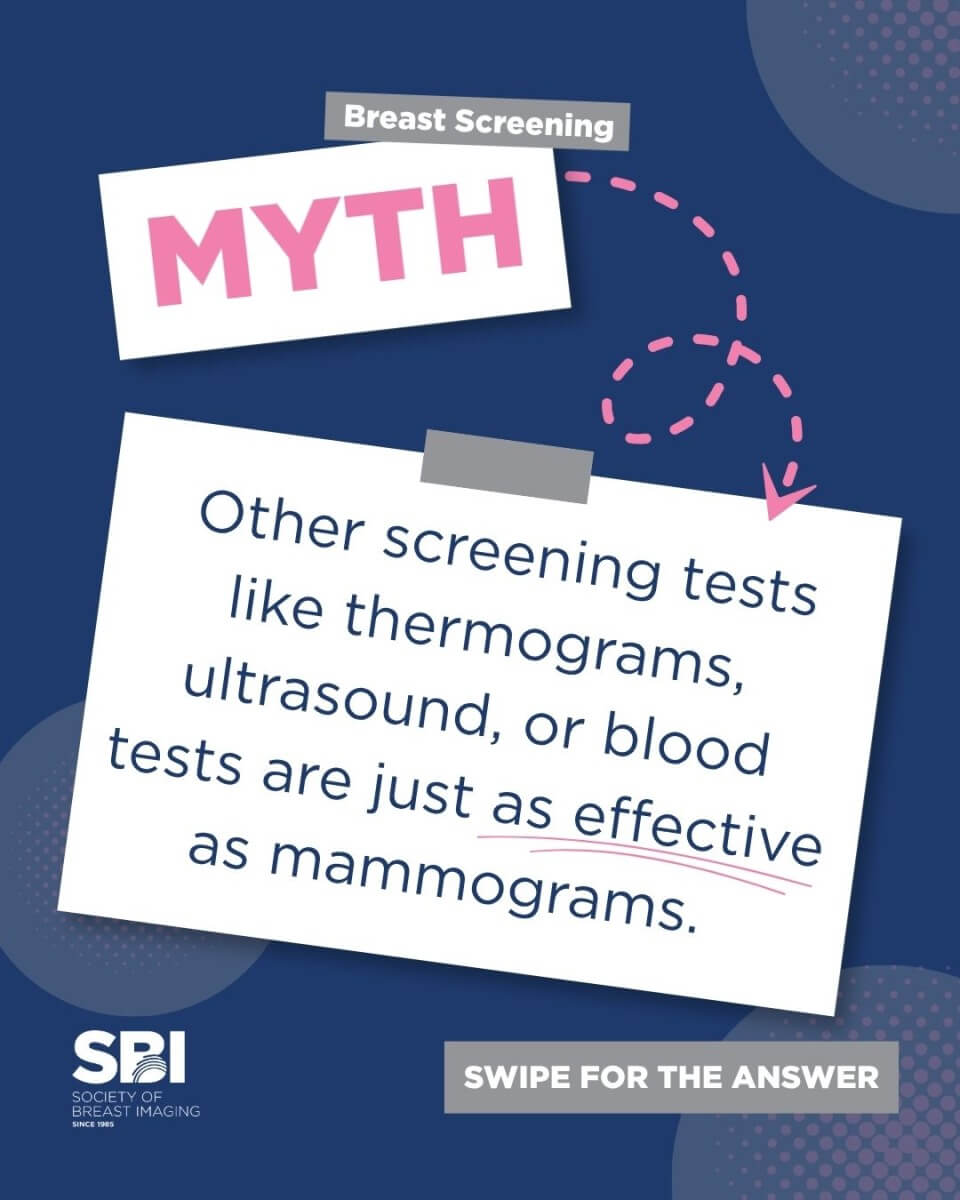
Myth or Fact: Other screening tests like thermograms, ultrasound, or blood tests are just as effective as mammograms.
MYTH! To date, mammograms are the only screening test that have been medically proven to reduce breast cancer mortality. Compared to mammograms, no other test has undergone such rigorous clinical trials with decades of patient follow-up monitoring.
Furthermore, no other test has as much patient-focused safety, quality assurance, and staff training regulations as mammograms. For these important reasons, all women have screening mammograms yearly, starting at age 40. Other screening tests may supplement but not replace mammograms.
Visit SBI's Hot Topic page to learn more about the other screening methods. #BreastCancerAwarenessMonth #40andEmpowered |
Patient Stories
 |
 |
 |
|
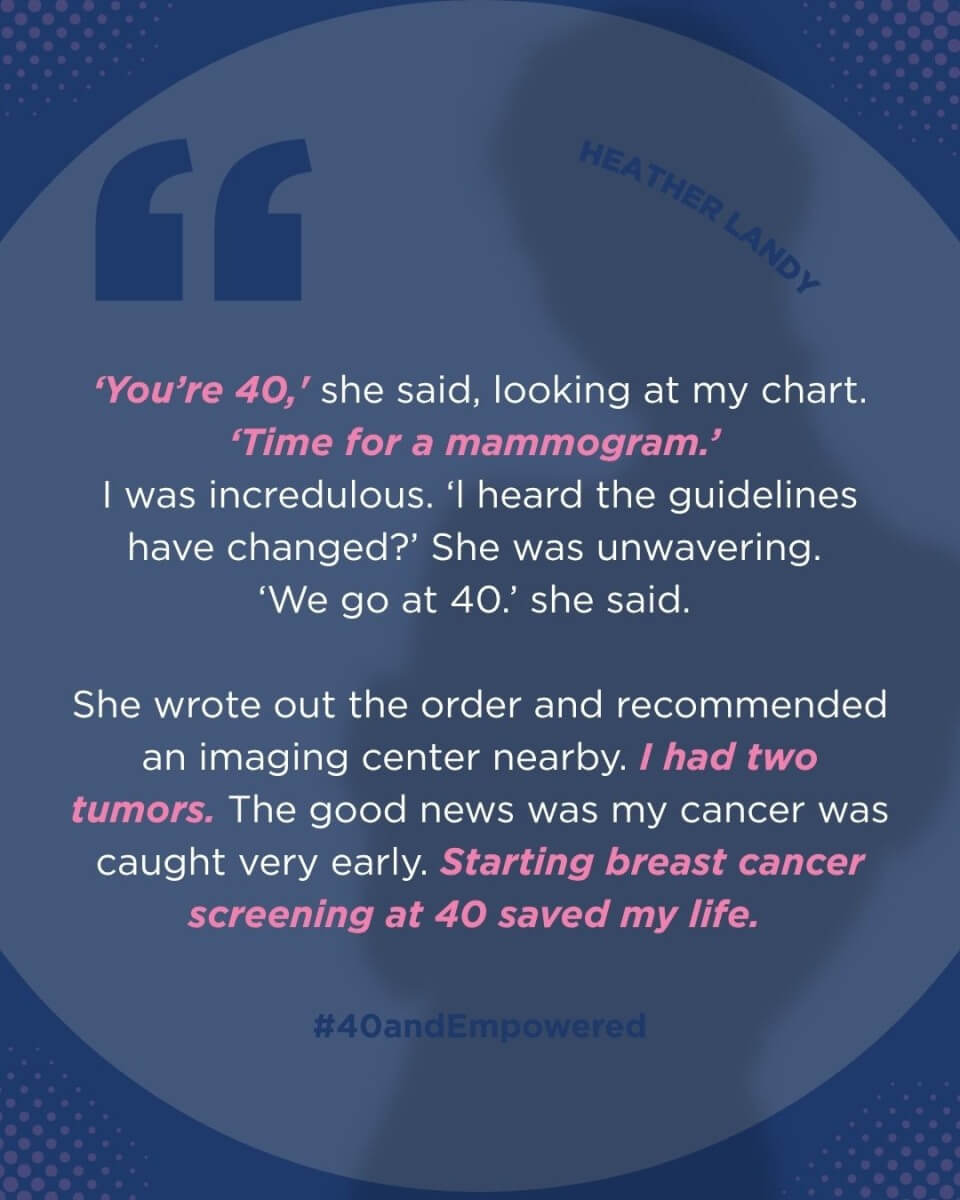
Starting breast cancer screening at 40 saved Heather Landy's life. Her story is not unique. That's why guidance from organizations like The Society of Breast Imaging has remained clear, consistent, and steadfast: annual screening should begin at age 40. |
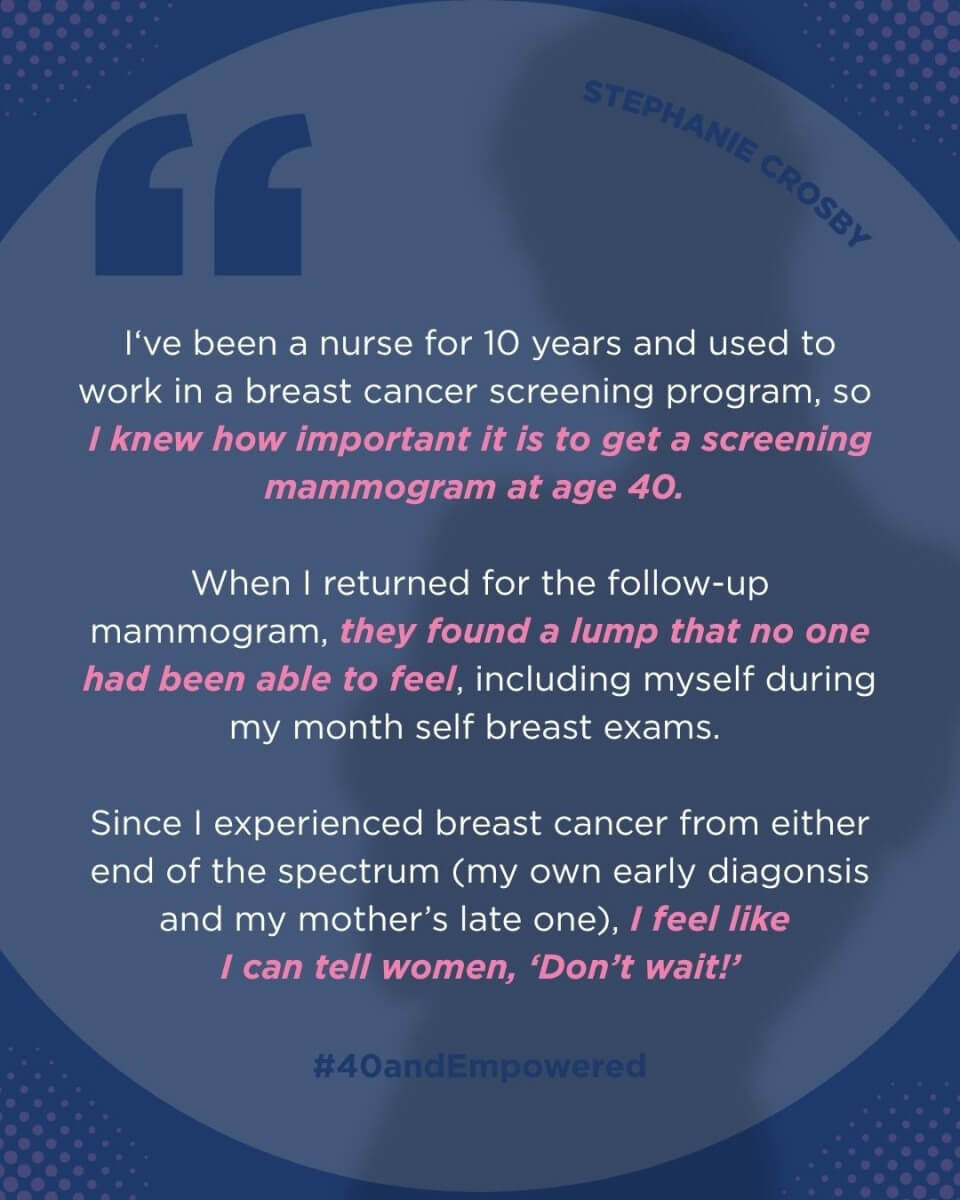
Mammograms can find tumors that even an experienced nurse's touch, like Stephanie Crosby's, can miss. Annual screenings should start at age 40. This Breast Cancer Awareness Month, we encourage our patients not to wait. Early detection saves lives. #BreastCancerAwarenessMonth #40andEmpowered |
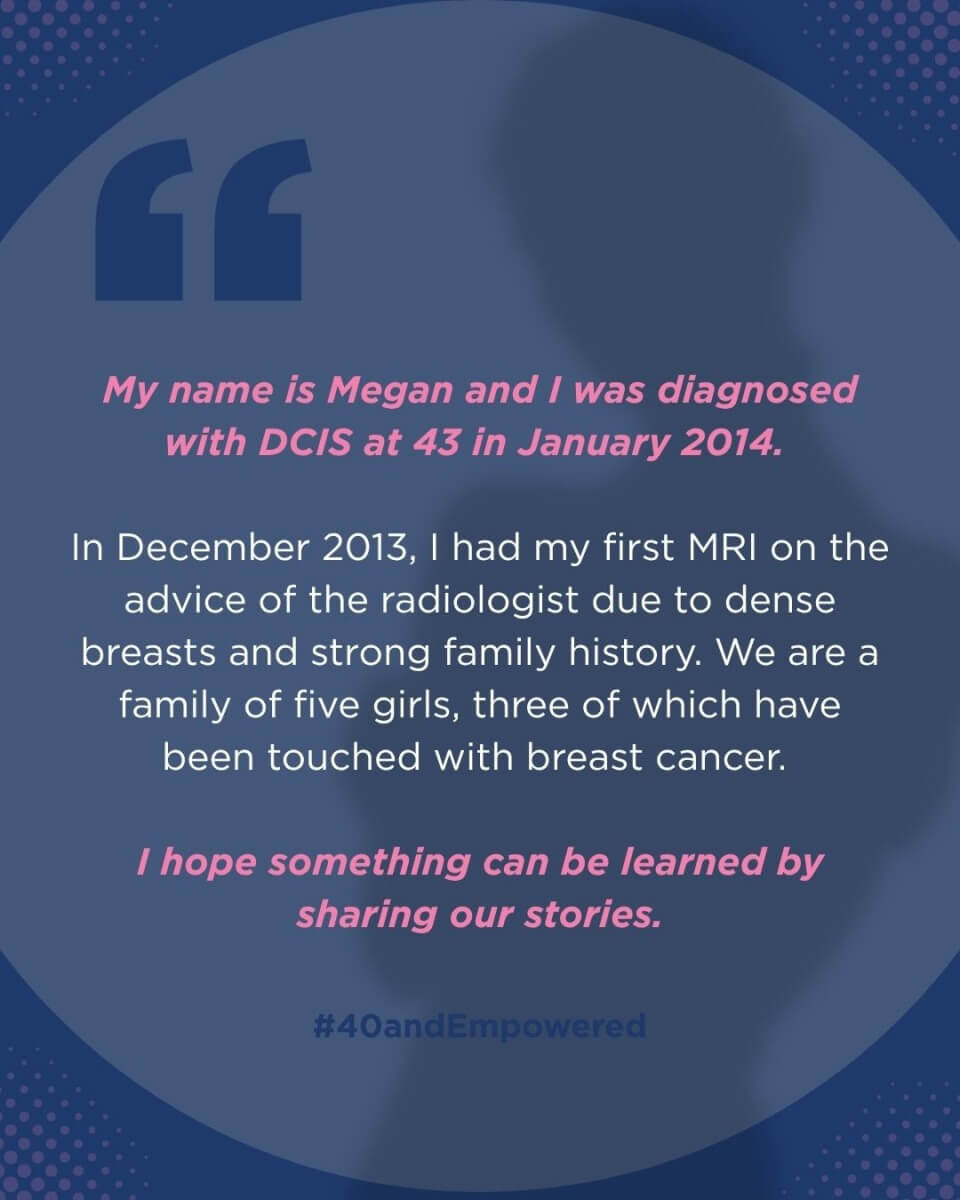
Breast cancer risk differs from patient to patient. If you have a family history of breast cancer, talk with your provider to see if you may benefit from supplemental screening or genetic counseling before standard screening even begins. Share your story with breast cancer screening. #BreastCancerAwarenessMonth #40andEmpowered |